
Tour Lisboa
Our Lisbon tour was designed with the aim of letting you know the most iconic points of the Portuguese capital. We organize for you an itinerary that allows you to experience the old and traditional Lisbon, popular neighborhoods, centenary monuments and also the modern Lisbon, facing the future.
| DEPARTURE/RETURN LOCATION | Pick-up Hotel/accommodation | ||||
| Starting | Please arrive at 8:45 am for a quick departure at 9;00 am. | ||||
| Return | Approximately at 6:00 pm. | ||||
| ITEMS INCLUDED |
|
||||
| ITEMS NOT INCLUDED |
|
 Parque Eduardo VII was designed in 1942 by Keil do Amaral and is the largest park in the center of Lisbon. It was baptized in 1903 in honor of Edward VII of the United Kingdom who visited Lisbon to reaffirm the alliance with the Portuguese crown (D. Carlos). It marks the transition between “Old Lisbon” and “Modern Lisbon”. It’s the stage for one of the best panoramic views of Lisbon and its 7 Colinas.
 The Parque das Nações (Nations Park) is the result of the requalification of the eastern area of Lisbon following EXPO98. It is the most modern and avant-garde area of Lisbon, with innovative buildings inspired by the Portuguese Discoveries. It is home to the Oceanarium (one of the largest aquariums in the world), the Lisbon International Fair, Altice Arena and the Portugal Pavilion. It is also here that the Casino of Lisbon is located. It is undoubtedly Portugal facing the future.
 The Castle of S. Jorge was built on an old Moorish fortification of the XI century, after the conquest of Lisbon by D. Afonso Henriques in 1147. It is an icon of Lisbon and one of the best viewpoints of the city. Alfama is the most typical and traditional Portuguese neighborhood. It is the heart of Lisbon, the stage of the popular festivals and Fado echoes in every street…
 Chiado and Bairro Alto are the most elegant areas of Lisbon. They are neighborhoods with an intense life and activity, populated by theaters, cafes, old bookstores and a beautiful architecture that oscillates between the buildings of the 18th century and the “art noveau” of the beginning of the 20th century. It is the Lisbon of the “Bélle Époque”, of Fernando Pessoa and Eça de Queiroz.
 The Jerónimos Monastery is the greatest jewel of the “Manueline” architecture and a celebration of the epic of the Discoveries. Its construction began in 1501 and took more than a century to complete. It is a landmark of wealth and commerce of the 16th century. A colossus of beauty, exquisite architecture and timeless history.
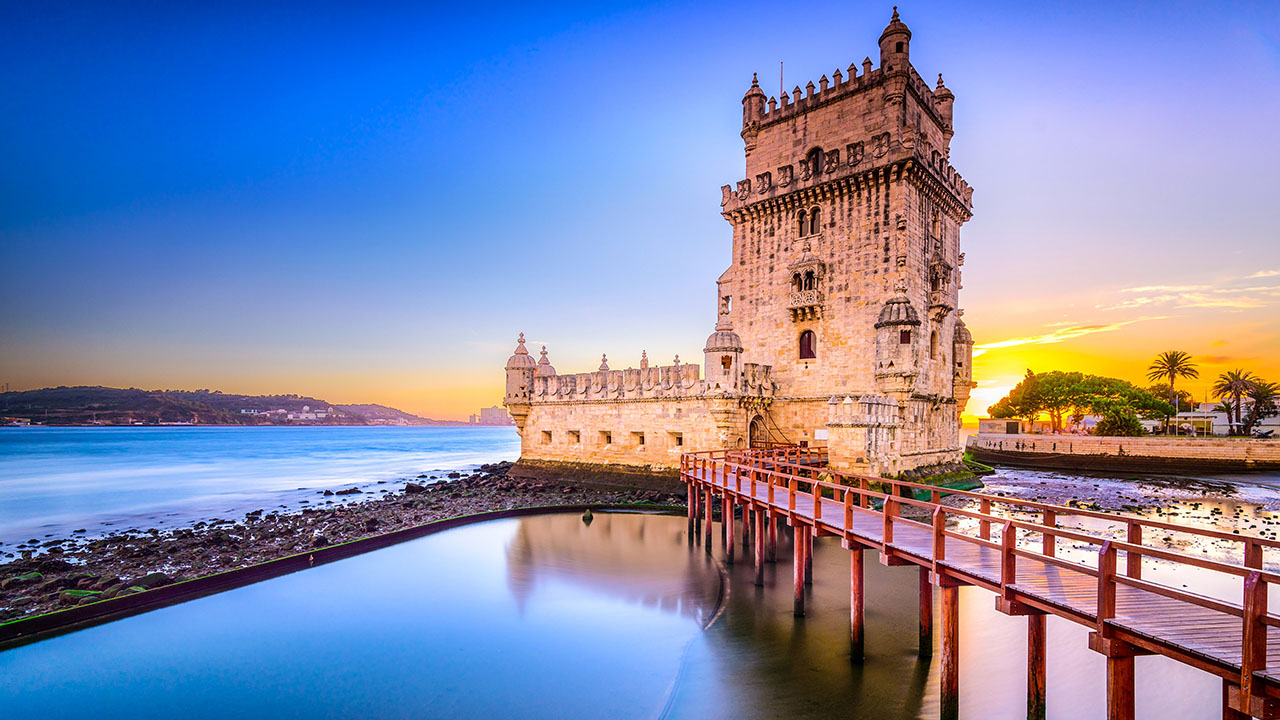
 Built on the north bank of the Tagus in the early 16th century, the Torre de Belém was a strategic military landmark in Lisbon’s defense. In addition to the military innovation it represented, it was also a bastion of Portugal and the Manueline era. It is a cultural reference, of the specificity and individuality of Portugal. UNESCO World Heritage.
 The Monument to the Discoveries evokes Portuguese overseas expansion, synthesizes a glorious past and symbolizes the greatness of the work of Prince Henry, the founder of the discoveries. Its construction took place in 1940 on the occasion of the Portuguese World Exhibition. It represents a caravel facing the sea and a tribute to the Infante D. Henrique, cartographers, navigators, warriors, chroniclers and artists of the time.



Tour Reviews
There are no reviews yet.
Leave a Review